
What is it?
The bā zì translates directly to “birth time eight characters”.
It’s made up of 4 pillars (your birth year, month, day and time) and each pillar is 2 characters, totalling a combination of 8 characters that hold enough significance it spells out your fate. For lots of Chinese people and cultures influenced by the Sinosphere, it’s an important calculation that could reveal your destiny. For people who don’t believe it, you can think of it as a fun superstition, like a horoscope.
If you’re suddenly finding yourself having trouble grasping concepts like “destiny” and “fate” and confused as to why some people are so attached to these ideas, have a look at this article I wrote earlier on how these concepts shape Chinese culture, philosophy, language, thought process and behaviour.
bā zì and the measurement of time
To understand bā zì, one must grasp how Han Chinese people traditionally recorded time. Time was measured by the “10 Heavenly Stems and Twelve Earthly Branches”, in simple terms by looking at stars and using the 12 zodiac signs as corresponding units to indicate hours of the day and changing of seasons. It originated in the Western Han Dynasty, and officially became a unit of measurement to record the cyclic changes over time by Emperor Wu of the Han Dynasty (156-87 BC).
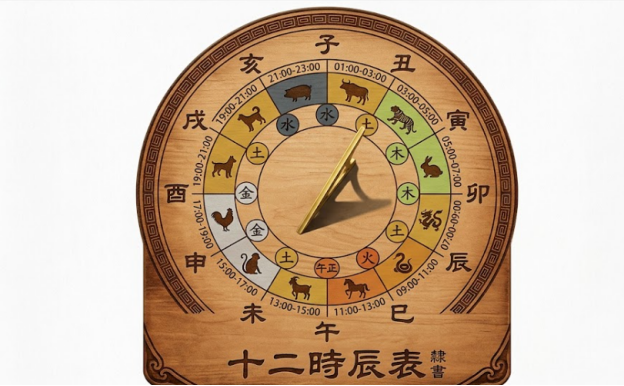
The Concept
The concept of bā zì supposedly started during the Tang Dynasty, then developed further during the Song Dynasty through more refined calculations. Bā zì is not a string of numbers, but rather represented by the characters as part of the 12 Earthly Branches (or traditional zodiac characters) heavily grounded in astrology. These characters are equated with the five elements and result in a list of elements that the individual possesses. It is believed due to the cyclic nature of time, one can calculate marriage happiness, career success, health and fortune through these eight characters. By calculating the individual's ties with the five elements, which are interrelated complimenting and competing forces that describe how the cosmos and everything in it naturally moves, a bā zì or metaphysics master could interpret your fate.
A person’s bazi may seem defining but it can also be changed through outside forces such as changing your name or environment (feng shui) to curate a more favourable or easier destiny. A common example is choosing characters with certain elements in a name to compensate or balance out missing qualities. As Chinese characters are made of radicals/components and are pictographs, each character can be made of common radicals like three dots for water (氵) or a character that symbolises the word is related to wood or trees ( 木).
In traditional families, bā zì is still taken seriously and commonly discussed at birth to understand if a child will encounter any hardships that are brought by fate and how to mitigate this unavoidable hardship. It is also discussed during major milestones in life such as career changes and marriage to see if two people are compatible.
Luck Pillar
If bā zì is the hand you're dealt, the 大运 (dà yùn) or "luck pillars" are how that hand gets played out over time. The eight characters themselves never change, but they're read against a run of ten-year periods, each with its own Stem and Branch pair, counted forward or backward from your Month Pillar depending on whether you were born in a yin or yang year and whether you're male or female.
The age you enter your first luck pillar is found by counting the days between your birth and the nearest 节气 (jié qì), a solar term, where three days stands in for one year. Sitting on top of that is the 流年 (liú nián), the character pair of whichever year you're currently living through. Practitioners have a line that sums up the hierarchy neatly: 流年如客,大运如主,命局如宅 — the year is a guest, the luck pillar is the host, and your chart is the house they're standing in. Basically, it suggests your luck reading is never the same throughout your life and helps predict when you may encounter hardship or when you may thrive.

So how do you calculate your bā zì?
Manually calculating your bā zì requires you to know your birthday according to the Chinese Calendar, some mathematics as well as Stem and Branch Charts. You can find some complicated steps online, with an example below:
- To calculate your "Year Pillar": take (Year − 3), then divide by 10 and keep only the remainder = your Heavenly Stem. Divide the same number by 12 and keep the remainder = your Earthly Branch. Ignore the quotient entirely; you only want what's left over. If a remainder comes out as 0, it means the last item in the list (the 10th Stem, or the 12th Branch). Map the two numbers to the Chart which depicts the Stem and Branch characters.
- To calculate your “Month Pillar”, match the Year Pillar to the Chart that shows you the 2 characters for your Month Pillar
- To calculate your “Day Pillar”: [(year−1)×5 + int((year−1)÷4) + days elapsed so far this year] ÷ 60 then take the remainder. Convert that remainder into a Stem and Branch pair.
- To calculate the “Hour Pillar”, match the Day Pillar to the Chart that shows the 1st Stem character and then match the corresponding time for the Branch character to get the whole Hour Pillar.
E.g. For a birthday of 6pm August 15th 2023.
Day Pillar Calculations: (2022×5=10110) + (2022÷4=505)+ 227 = 10842. 10842 ÷ 60 = 180 remainder 42, so the number you want is 42.
Which corresponds to these characters: 乙巳
The best way to work our your bā zì is through a practitioner, who specialises in these calculations and they can provide an analysis on what your birth chat means. Keep in mind some will require birth location for more precise measurements. If you want AI to calculate this on your behalf, the easiest way is to ask your preferred AI agent to generate a prompt to calculate this based on your own birthday and ask for a full explanation. There are apps that allow you to digitally generate a general analysis as well.

Fun Fact:
Ever wonder why you're told to wear red the year your zodiac animal comes back around? That's 本命年 (běn mìng nián), your "origin life year", and it runs on the same twelve Earthly Branches you've just read about. Your Branch returns every twelve years, and when it does you're said to be sitting directly under 太岁 (tài suì), the deity presiding over that year. 太岁当头坐,非灾便是祸 — when the Grand Duke sits overhead, if it isn't disaster it's misfortune. Red is the countermeasure.
This year is the Year of the Fire Horse, so if it's your zodiac year make sure you wear red!